
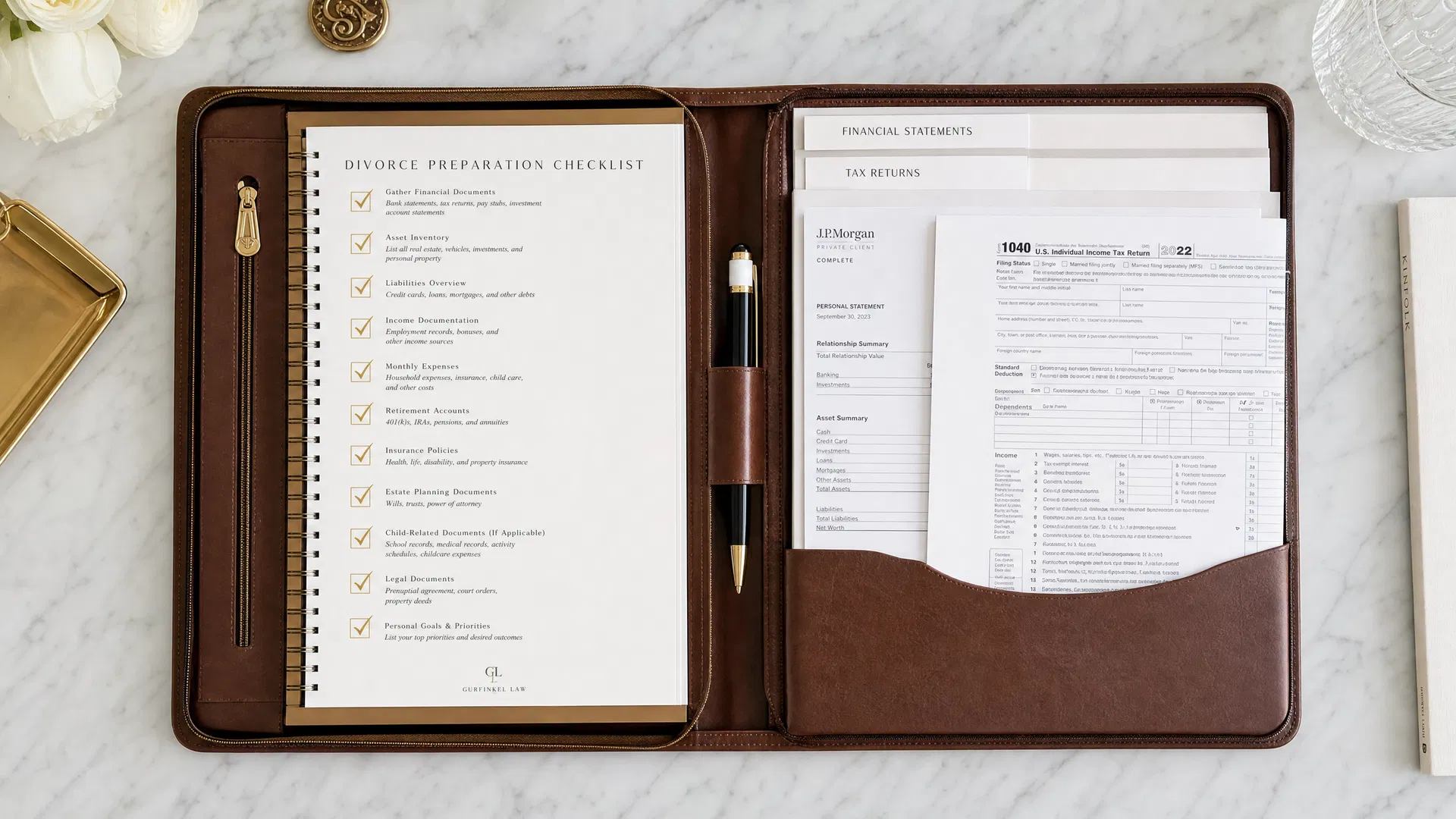
Preparing for a divorce in California can be an overwhelming process, but taking organized, proactive steps can significantly reduce stress and protect your legal rights. Whether you are initiating the divorce or responding to a petition, gathering the necessary documents and understanding the initial steps are critical to a smoother transition. This comprehensive checklist outlines the essential documents you need to collect, the steps to take before filing, and what to expect during the first 30 days of the process.
Essential Documents to Gather
Under California law, both parties in a divorce are required to exchange financial information through a process known as the Preliminary Declaration of Disclosure. According to California Family Code Section 2104, this disclosure must include all tax returns filed within the two years prior to the date of service, along with a complete and accurate statement of all assets and liabilities. Gathering these documents early will ensure you are prepared to meet these legal obligations.
Financial Documents
Financial transparency is a cornerstone of California divorce proceedings. You will need to compile comprehensive records of your income, assets, and debts.
Income and Tax Records:
Collect your state and federal tax returns for the past three to five years, including all W-2s, 1099s, and K-1s. You should also gather your most recent pay stubs covering at least the last two months. If you or your spouse are self-employed, obtain business tax returns, profit and loss statements, and balance sheets.
Banking and Investment Statements:
Secure statements for all checking, savings, and money market accounts for the past 12 to 24 months. This includes joint accounts and accounts held individually. Additionally, gather statements for all investment accounts, mutual funds, stocks, and bonds.
Retirement and Pension Records:
Retirement assets are often subject to division in a California divorce. Collect the most recent statements for all 401(k)s, IRAs, pensions, and other retirement accounts. If applicable, obtain summary plan descriptions for any pension plans.
Real Estate and Property Records:
For any real property owned, gather the deeds, current mortgage statements, property tax bills, and any recent appraisals. If you own rental properties, collect the lease agreements and records of rental income and expenses.
Debts and Liabilities:
Compile statements for all outstanding debts, including credit cards, personal loans, student loans, and auto loans. It is crucial to have a clear picture of both joint and individual liabilities.
Personal and Legal Documents
In addition to financial records, you must gather essential personal and legal documents that establish the foundation of your marriage and any prior agreements.
Marriage and Identification Documents:
Obtain a certified copy of your marriage certificate. You should also have copies of your driver's license, passport, and social security card readily available.
Prior Legal Agreements:
If you and your spouse executed a prenuptial or postnuptial agreement, secure a copy of the fully executed document. These agreements can significantly impact the division of assets and spousal support.
Estate Planning Documents:
Gather copies of any wills, trusts, powers of attorney, or advance healthcare directives. You may need to update these documents as your divorce progresses.
Children's Information
If you have minor children, their well-being and financial support will be a primary focus of the divorce proceedings.
Identification and Medical Records:
Collect your children's birth certificates, social security cards, and passports. Gather their medical and dental records, including information on current prescriptions and health insurance cards.
Educational and Extracurricular Records:
Obtain report cards, school attendance records, and information regarding any special educational needs. Compile records of expenses related to extracurricular activities, tutoring, and childcare.
Steps to Take Before Filing
Taking strategic steps before officially filing for divorce can help protect your interests and set a positive tone for the proceedings.
Secure Copies of Important Documents
Before the divorce is filed, ensure you have secure copies of all the documents listed above. Store these copies in a safe location outside the marital home, such as a safety deposit box or a secure digital cloud storage account. Having access to these records is vital, as documents can sometimes become difficult to obtain once the divorce process begins.
Open Individual Accounts
To establish financial independence, consider opening a new checking and savings account in your name only. You may also want to apply for a credit card in your own name to begin building or maintaining your individual credit history. Ensure that any funds transferred to these new accounts are accounted for and do not violate any automatic temporary restraining orders (ATROs) that take effect upon filing.
Consult with a Qualified Family Law Attorney
Divorce is a complex legal process with long-lasting implications. Consulting with an experienced family law attorney early on is one of the most important steps you can take. An attorney can provide personalized advice based on your unique circumstances, explain your rights under California law, and help you develop a strategic plan for your case.
What to Expect in the First 30 Days After Filing
The initial phase of a divorce involves formal legal procedures and the establishment of temporary guidelines.
Filing and Serving the Petition
The divorce process officially begins when one spouse files a Petition for Dissolution of Marriage with the court. Once filed, the petition and a Summons must be formally served on the other spouse. The Summons includes standard Automatic Temporary Restraining Orders (ATROs), which prohibit both parties from taking certain actions, such as selling property, altering insurance policies, or taking minor children out of state without consent.
The Response
The spouse who receives the petition (the respondent) has 30 days to file a formal Response with the court. Failing to respond within this timeframe can result in a default judgment, meaning the court may grant the requests made in the petition without the respondent's input.
Preliminary Disclosures
Within 60 days of filing the petition, the petitioner must serve their Preliminary Declaration of Disclosure on the respondent. The respondent must serve their disclosure either concurrently with their Response or within 60 days of filing it. These disclosures are mandatory and form the basis for negotiating property division and support.
Conclusion
Preparing for a divorce requires careful planning and organization. By gathering the necessary documents and understanding the initial steps, you can navigate the process with greater confidence and clarity.
Schedule a complimentary 15-minute phone consultation. In-depth case strategy sessions are available at a flat fee. Contact Barsamyan Family Law at (424) 600-0019 or schedule online at barsamyanfamilylaw.com/contact.
This article is for informational purposes only and does not constitute legal advice. Every situation involves unique facts and circumstances. Consult with a qualified attorney before making legal decisions.